
Storm history you can check yourself. Source-stamped PDFs.
Search any address. Get documented NOAA hail, wind, and tornado events with date, severity, duration, and radar imagery for that location.
- NOAA & NWS data sources
- Source-stamped PDFs
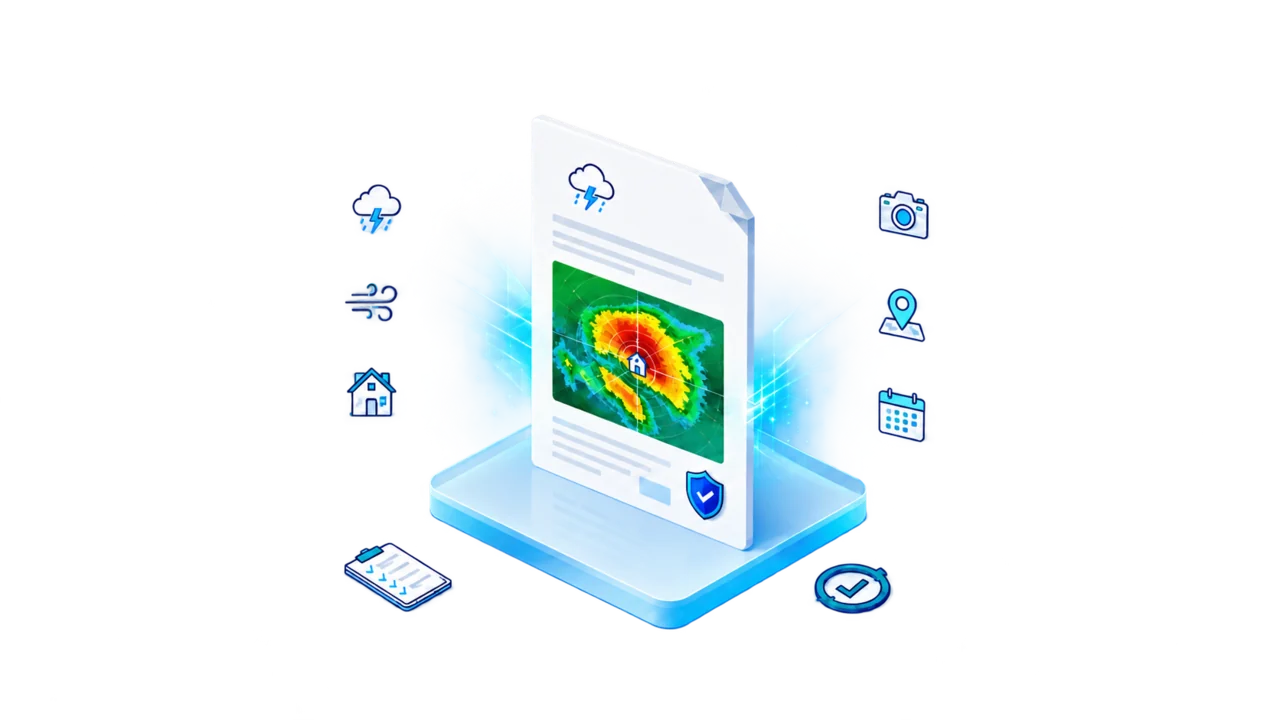
Built from the same official records, which anyone can check.
We aggregate four authoritative federal sources and cross-reference every event. Nothing is paraphrased, and nothing is inferred. Every record links back to its public source.
NOAA Storm Events
Official record of severe weather events. Reported hail size, wind, tornadoes, and damage estimates.
NEXRAD Level II
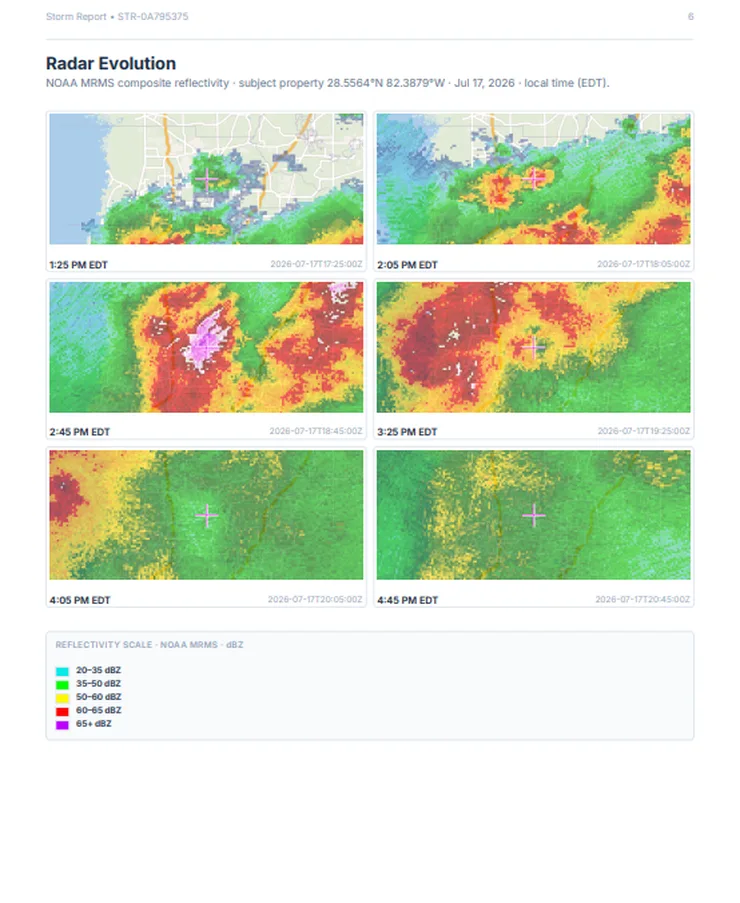
WSR-88D Doppler radar archive. Reflectivity, velocity, and dual-polarization scans every 4–6 minutes.
MESH algorithm
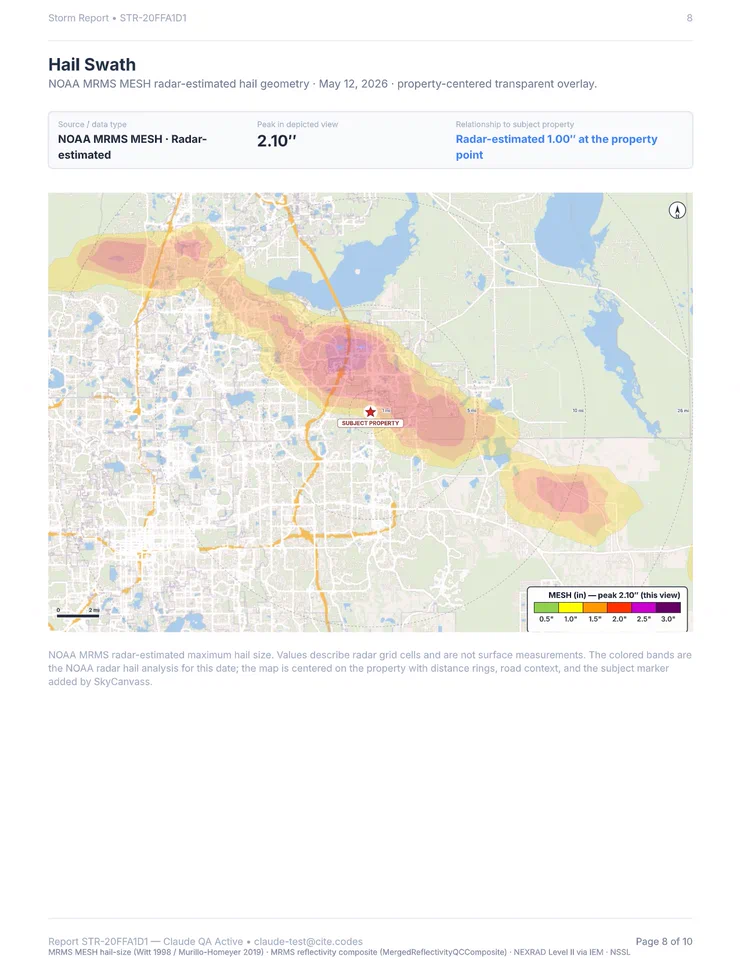
Maximum Estimated Size of Hail derived from radar reflectivity at the freezing level. Industry standard.
NWS Storm Data
County-level local storm reports, ground truth from trained spotters, and post-event surveys.
What you get with every report.
A SkyCanvass storm report lays the primary-source records out in plain order, fast to read and cited line by line.
Event summary
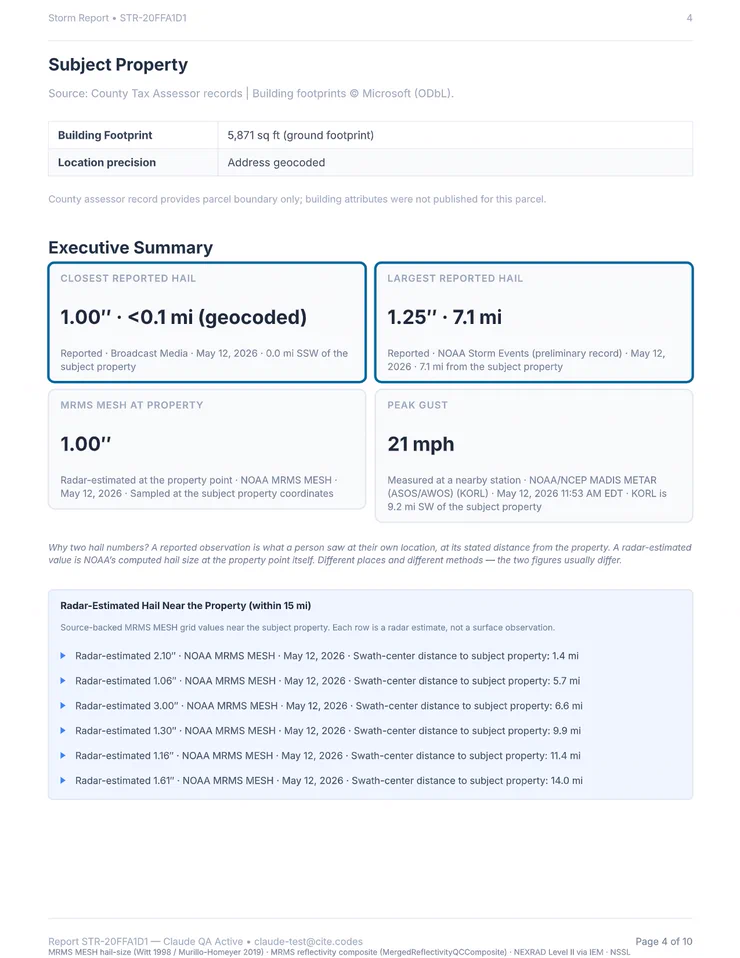
Date, time, peak hail size, peak wind, duration. Anyone can scan it in 10 seconds.
Radar imagery
Radar reflectivity at storm peak, paired with the cited hail and wind records for the address.
Storm timeline
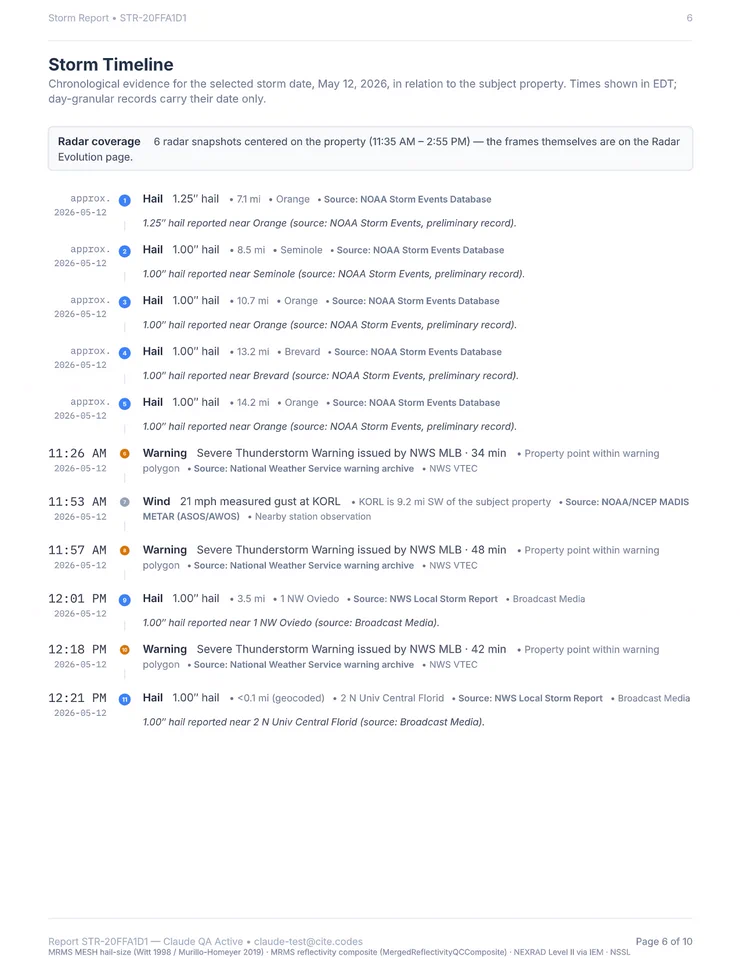
Documented hail, wind, and tornado events tied to the address, listed in chronological order with source links.
Source bibliography
NOAA, NWS, and SPC links for every record. Auditable and unambiguous.
Wind addendum
Gust history with NWS source for complete wind documentation.
Pairs with photos
Combine with a photo report so the storm record and the site photos sit in one file.
When to pull a storm report.
The report tells you which streets to work. The canvassing app included with the CRM is where your team runs the doors.
Storm-date confirmation
The customer remembers a storm 'last spring.' Pull the report to confirm date, severity, and whether the address was actually hit.
Prove the storm happened
Someone says there was no severe weather at the address. The report shows radar imagery for the storm date and cited hail, wind, and tornado records for that location. Primary-source records, not memory.
Pre-canvass intel
A storm hits a neighborhood. Pull a regional report, identify hardest-hit ZIPs, and send your people to the right doors.
Back up the estimate
Attach the storm record to the estimate so every line traces back to a documented event. Accurate work, shown to be accurate.
Consistent records
Put the same storm documentation on every record you keep, so the history is cited the same way every time and quick to look up.
Repeat-exposure pattern
Multiple events over time show up as separate cited records. Bidding a re-roof, the timeline lists every hit with its size and date, which is what the scope has to account for.
Pull your first storm report.
One address, one PDF. NOAA-sourced records delivered in under 30 seconds. $10 for one, or $120 for twenty.